
Preserving wildlife
 The Mkomazi National Park is a magnificent, 3,500 square kilometre game reserve in northern Tanzania. Remote and inaccessible, it was established in 1951, but never attracted the financial support provided for the better known wildlife strongholds such as the Ngorongoro and the Serengeti National Parks. Only since 1989, when the Tanzanian Government reexamined the reserve's status and designated it a National Priority Project, has its true significance and importance been recognized.
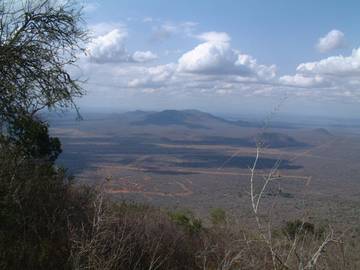 The Mkomazi National Park is a spectacular wilderness. Within sight to the northwest is Mount Kilimanjaro, Africa's highest summit. To the south, the Pare and Usumbara Mountains form a dramatic backdrop and, to the north, Kenya's vast Tsavo National Park shares a border with Mkomazi, making common ground for migratory herds of elephant, oryx and zebra during the wet season. Together with Tsavo, it forms one of the largest and most important protected ecosystems on earth.
Mkomazi is the southern tip of the Sahel zone. It is a classic dry-country reserve of grey-green nyika bush, ancient baobab trees and isolated rocky hills. Elsewhere, the seas of bush give way to open savannah woodlands of umbrella acacias and mbugas - shallow valleys of grassland.
The animals, too, are typical of the arid nyika. Giraffe, oryx, gerenuk, hartebeest, lesser kudu, eland, impala and Grant's gazelle share the reserve with elephant, buffalo, and numerous predators, including lion, leopard and cheetah. In all, 78 species of mammals have been recorded.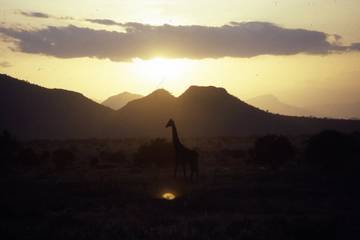
The birds of Mkomazi are even more numerous, with over 400 recorded species. Doves, hornbills, weavers and guinea-fowl are all present in large numbers - as well as such striking species as the martial eagle and violet wood-hoopoe.
By 1988, Mkomazi was in steep decline. It represented a classic example of degradation. Heavy poaching had wiped out its black rhino and elephant populations. Overgrazing, deliberate burning and illegal hunting had also taken their toll. At one time, it was even feared that the reserve might be de-gazetted and released for subsistence agriculture. The Tanzanian Government then re-examined the status of Mkomazi Game Reserve, with a view to ensuring the complete rehabilitation of this vast area and the reintroduction of its endangered species, and the reserve was awarded National Priority Project status. The Government invited Tony Fitzjohn to to work with them on a program of habitat restoration and the reintroduction of endangered species. In 1989, the Mkomazi Project was born.
The George Adamson Wildlife Preservation Trusts have been the Tanzanian Government's main partner in this unique and important endeavour. Since 1988, the majority of the resources of the Trusts have been devoted to the project. Roads, boundaries and 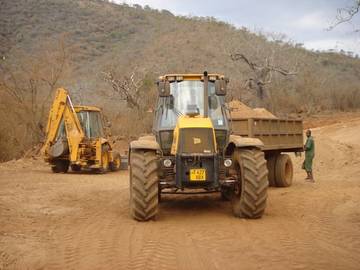 airstrips have been cleared, an
 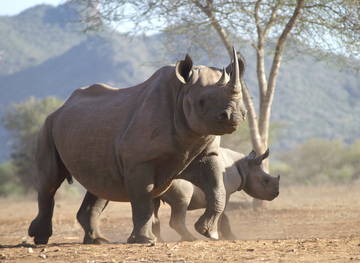 entire radio network installed, water sources sited and pumped, dams constructed and de-silted, rangers recruited and equipped, and well over fifteen hundred air-hours flown on anti-poaching patrols. The captive-breeding program for the African Wild Dog has been established, and a rhino sanctuary has been constructed and stocked. Both form part of the Tanzanian Government's policy on endangered species. The result has been one of spectacular success. One of the most fragile, threatened and beautiful parts of Africa has been reborn.
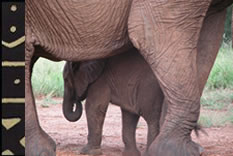
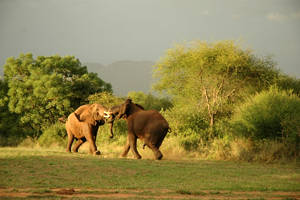
Already, the years of hard work have had a profound effect on the animals living in the reserve. At the end of the 1980's, after two decades of slaughter at the hands of ivory poachers, only eleven elephants were left in Mkomazi. Today, during the rainy season, close on 1,000 elephants range freely across the reserve, including many herds of breeding females with their young.